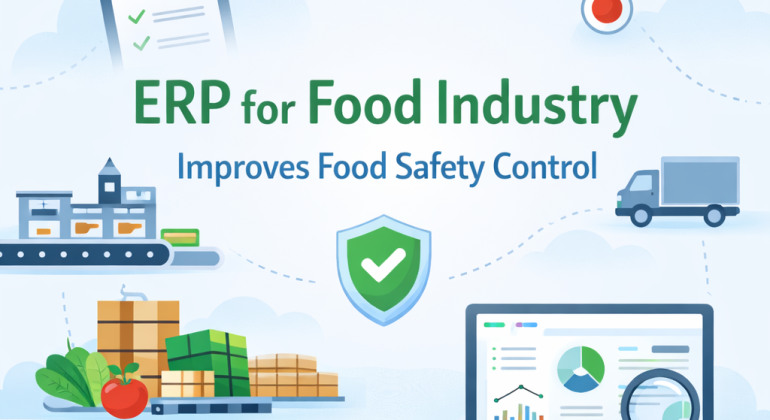
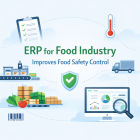
How ERP for Food Industry Improves Food Safety Control
 Written by FINACJanuary 27, 2026
 Food safety problems rarely show up suddenly. They usually build quietly through missed checks, unclear records, or small delays that no one notices at first. A temperature log gets filled late. A batch record is incomplete. A supplier document goes missing. Over time, these small gaps turn into real risks.
ERP for Food Industry helps food businesses avoid this situation by keeping everything connected. When production data, quality checks, inventory, and compliance records stay in one place, teams stay aware, decisions stay clear, and food safety stays under control.
This is why many food manufacturers and distributors now rely on ERP Solutions to manage safety as part of daily work instead of treating it as a separate task.
What ERP for Food Industry means for food safety control
ERP for Food Industry is software designed to manage food operations from raw material intake to final dispatch. It handles production batches, quality inspections, storage conditions, supplier data, and compliance records inside one system.
For food safety, this means fewer blind spots. Every step gets recorded as it happens. Teams know what was produced, how it was checked, where it was stored, and where it was delivered. Safety decisions come from actual data, not memory or guesswork.
Why food safety becomes difficult as operations expand
In the early stages, food businesses often rely on manual logs and spreadsheets. This works until volumes increase. As more products, suppliers, and shifts get added, information starts spreading across departments.
Quality teams may record checks in one place. Production teams may follow schedules from another. Managers receive updates late. ERP for food manufacturing solves this by showing everyone the same information in real time.
When teams work from one system, mistakes reduce and unsafe products become easier to stop early.
How ERP improves batch and lot traceability
Traceability becomes critical the moment a quality issue appears. ERP systems connect raw material batches to production runs and finished goods automatically.
When a problem is detected, the system helps answer key questions quickly:
- Which raw materials were used
- Which production batches were affected
- Which customers received the product
This speed helps food businesses respond fast, limit recalls, and protect customers without stopping all operations.
How quality checks fit naturally into daily work
Quality checks often fail when they feel separate from production. ERP software for food safety integrates checks directly into workflows.
Temperature readings, hygiene inspections, weight checks, and lab results get logged during production. If a value falls outside limits, the system highlights it immediately. Supervisors can act before the batch moves further.
Quality records stay linked to each batch, which helps during audits and internal reviews.
How ERP helps control expiry dates and shelf life
Expiry management becomes risky when handled manually. ERP systems track manufacturing dates, expiry dates, and storage rules automatically.
The system shows which items should be used or shipped first. FIFO and FEFO practices stay active across warehouses. Storage issues like temperature changes become visible early.
For exporters, ERP also helps manage different shelf life rules across markets, reducing rejection risk.
Why supplier data plays a direct role in food safety
Food safety often starts with suppliers. ERP for Food Industry stores supplier details, certifications, inspection results, and delivery history in one place.
Each delivery links to quality outcomes. Over time, teams can see patterns and address issues early. This helps reduce safety risks before production even begins.
Supplier audit documents also stay easy to access during inspections.
How ERP simplifies food safety compliance
Compliance becomes stressful when records are scattered. ERP software for food manufacturing keeps inspection logs, corrective actions, training records, and production history organized.
Reports generate quickly with clear timelines. Auditors receive answers backed by system data. Teams stay audit ready throughout the year instead of preparing at the last minute.
How real time visibility helps prevent safety issues
Food safety problems often start small. Slight temperature drift. Delayed inspections. Repeated minor deviations. ERP dashboards show live production data and quality alerts.
Managers notice trends early and fix them before they grow. Early action reduces waste and protects product safety without disrupting operations.
How ERP keeps food safety steps consistent across teams
Consistency matters in food safety. ERP systems guide teams through approved steps and required checks.
Training records connect to job roles. New staff follow the same process as experienced workers. When procedures update, changes reflect across the system immediately.
This structure reduces human error and keeps daily work aligned with safety standards.
How ERP supports food safety as the business grows
Growth adds complexity. New products, new locations, and new regulations increase pressure. ERP for Food Industry scales with operations by applying the same safety controls everywhere.
New production lines follow existing quality rules. New warehouses connect to the same inspection and inventory tracking. Compliance data stays organized as markets expand.
Why food businesses choose FINAC ERP
Food businesses need ERP systems that understand real production environments. FINAC ERP supports food manufacturers and distributors by connecting production, inventory, quality, and compliance into one platform.
This setup helps teams stay in control, respond faster to issues, and maintain safe operations every day.
Conclusion
ERP for Food Industry brings food safety into everyday operations. Data stays connected. Checks happen on time. Records stay clear. Teams act faster when something goes wrong.
If food safety matters to your business, relying on manual systems creates risk you do not need.
FINAC ERP helps food businesses take control of safety, compliance, and daily operations in one system. If you are ready to reduce risk and simplify food safety management, this is the right time to start that conversation.
Recent Comments