ERP Solution

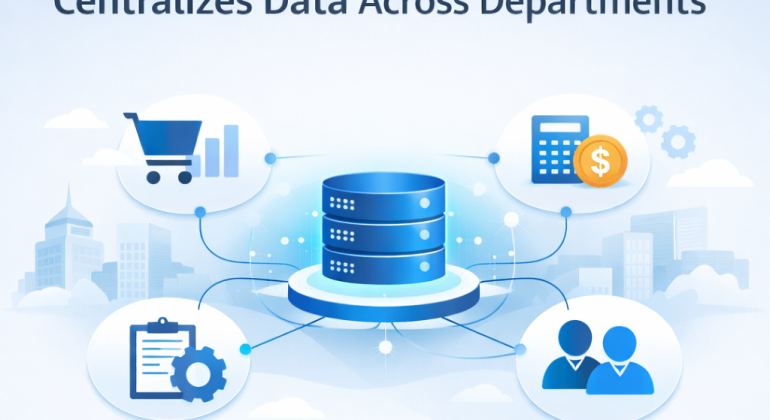
How ERP Software Centralizes Data Across Departments

Every business reaches a point where simple questions stop having simple answers. Sales says one thing, finance says another, inventory shows different numbers, and HR works in a separate loop. Nothing is technically wrong, yet everything feels slow and confusing.

This usually happens when data lives in too many places. Spreadsheets, emails, accounting tools, CRMs, and manual records all hold pieces of the story. ERP Software fixes this by bringing everything together into one system, so the business finally works as one unit instead of separate parts.


What Centralized Data Means in ERP Software

Centralized data means all business information is stored inside one ERP system instead of scattered across different tools. Every department works from the same data, updated in real time, with access based on roles.

When a sales order is created, finance sees it instantly. Inventory updates without waiting. Operations know what needs to be delivered. Everyone looks at the same information without asking for updates.

This shared setup removes confusion and keeps teams aligned.


Why Data Gets Disconnected Across Departments

Data usually becomes disconnected as businesses grow. Each department adopts tools to solve its own problems quickly. Sales uses a CRM, finance uses accounting software, inventory tracks stock separately, and HR manages employee data in files.

These tools do not sync well. Information gets copied manually. Reports stop matching. Teams spend time checking numbers instead of acting on them.

ERP Software replaces these disconnected tools with one platform that links every department.


How ERP Software Shares Data Between Teams

ERP Software uses one central database connected to different modules. Each department works in its own area, but all data flows through the same system.

When sales confirms an order, inventory levels update automatically. Finance records revenue without re entry. Operations receive delivery details immediately.

This flow happens as part of normal work, without manual syncing.


How Real Time Data Improves Daily Work

Real time data shows updates as they happen. ERP Software refreshes records instantly when actions take place.

Sales checks live stock before confirming orders. Finance tracks payments without waiting for reports. Managers see current performance instead of outdated summaries.

This helps teams act faster and avoid mistakes caused by old information.


How ERP Software Reduces Errors and Repeated Work

Entering the same data in multiple systems increases errors. Even small mistakes can affect reports across departments.

ERP Software allows data to be entered once and reused everywhere. Customer records, product details, supplier information, and employee data stay consistent.

Cleaner data saves time and improves trust in reports.


How Centralized Data Improves Team Coordination

When everyone works from the same data, coordination becomes smoother.

Sales understands delivery timelines clearly. Inventory plans stock based on actual demand. Finance tracks costs and income without chasing updates. HR aligns hiring plans with real operational needs.

ERP Software reduces back and forth communication and keeps teams focused on work.


How ERP Software Improves Reporting and Visibility

ERP Software generates reports from one source, so numbers stay consistent across departments.

Sales reports align with finance data. Inventory reports reflect real stock levels. Management dashboards show a clear view of the business.

This makes planning and decision making easier.


How Data Stays Secure in an ERP System

Centralized data stays secure through role based access. Each user sees only what is relevant to their role.

Finance data remains restricted. HR records stay private. Operations teams manage inventory and workflows safely.

Security becomes easier to manage inside one system.


When Businesses Usually Shift to ERP Software

Businesses usually move to ERP Software when reporting becomes slow, errors increase, or teams rely heavily on manual coordination.

Signs include mismatched numbers, repeated data entry, delayed decisions, and difficulty tracking real time performance.

Adopting ERP earlier helps avoid larger issues later.


How ERP Software Supports Business Growth

Growth increases data volume quickly. New employees, more transactions, and added processes strain disconnected systems.

ERP Software scales smoothly. New users and departments can be added without breaking data flow. All information stays connected.

This keeps operations stable during expansion.


Long Term Value of Centralized ERP Data

ERP Software standardizes how data is recorded across departments. Workflows follow a clear structure.

Historical data stays organized, which supports forecasting, audits, and planning. Since everything lives in one system, trend analysis becomes simpler over time.

These benefits grow stronger as the business evolves.


Conclusion

Disconnected data slows businesses down in ways that are easy to feel but hard to fix. ERP Software solves this by bringing every department onto one shared system, where information flows smoothly and decisions become clearer.

If your teams spend time matching numbers, chasing updates, or fixing errors, it may be time for a better way to work.

FINAC ERP helps businesses centralize data, align departments, and regain control of daily operations. Take a closer look at how FINAC ERP can simplify your processes and support your next stage of growth.
 

Read More
ERP Solution

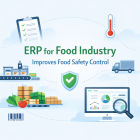
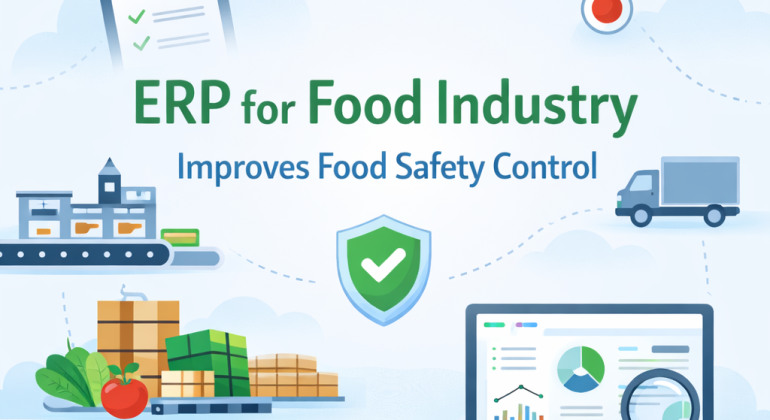
How ERP for Food Industry Improves Food Safety Control

Food safety problems rarely show up suddenly. They usually build quietly through missed checks, unclear records, or small delays that no one notices at first. A temperature log gets filled late. A batch record is incomplete. A supplier document goes missing. Over time, these small gaps turn into real risks.

ERP for Food Industry helps food businesses avoid this situation by keeping everything connected. When production data, quality checks, inventory, and compliance records stay in one place, teams stay aware, decisions stay clear, and food safety stays under control.

This is why many food manufacturers and distributors now rely on ERP Solutions to manage safety as part of daily work instead of treating it as a separate task.


What ERP for Food Industry means for food safety control

ERP for Food Industry is software designed to manage food operations from raw material intake to final dispatch. It handles production batches, quality inspections, storage conditions, supplier data, and compliance records inside one system.

For food safety, this means fewer blind spots. Every step gets recorded as it happens. Teams know what was produced, how it was checked, where it was stored, and where it was delivered. Safety decisions come from actual data, not memory or guesswork.


Why food safety becomes difficult as operations expand

In the early stages, food businesses often rely on manual logs and spreadsheets. This works until volumes increase. As more products, suppliers, and shifts get added, information starts spreading across departments.

Quality teams may record checks in one place. Production teams may follow schedules from another. Managers receive updates late. ERP for food manufacturing solves this by showing everyone the same information in real time.

When teams work from one system, mistakes reduce and unsafe products become easier to stop early.


How ERP improves batch and lot traceability

Traceability becomes critical the moment a quality issue appears. ERP systems connect raw material batches to production runs and finished goods automatically.

When a problem is detected, the system helps answer key questions quickly:

  • Which raw materials were used

  • Which production batches were affected

  • Which customers received the product

This speed helps food businesses respond fast, limit recalls, and protect customers without stopping all operations.


How quality checks fit naturally into daily work

Quality checks often fail when they feel separate from production. ERP software for food safety integrates checks directly into workflows.

Temperature readings, hygiene inspections, weight checks, and lab results get logged during production. If a value falls outside limits, the system highlights it immediately. Supervisors can act before the batch moves further.

Quality records stay linked to each batch, which helps during audits and internal reviews.


How ERP helps control expiry dates and shelf life

Expiry management becomes risky when handled manually. ERP systems track manufacturing dates, expiry dates, and storage rules automatically.

The system shows which items should be used or shipped first. FIFO and FEFO practices stay active across warehouses. Storage issues like temperature changes become visible early.

For exporters, ERP also helps manage different shelf life rules across markets, reducing rejection risk.


Why supplier data plays a direct role in food safety

Food safety often starts with suppliers. ERP for Food Industry stores supplier details, certifications, inspection results, and delivery history in one place.

Each delivery links to quality outcomes. Over time, teams can see patterns and address issues early. This helps reduce safety risks before production even begins.

Supplier audit documents also stay easy to access during inspections.


How ERP simplifies food safety compliance

Compliance becomes stressful when records are scattered. ERP software for food manufacturing keeps inspection logs, corrective actions, training records, and production history organized.

Reports generate quickly with clear timelines. Auditors receive answers backed by system data. Teams stay audit ready throughout the year instead of preparing at the last minute.


How real time visibility helps prevent safety issues

Food safety problems often start small. Slight temperature drift. Delayed inspections. Repeated minor deviations. ERP dashboards show live production data and quality alerts.

Managers notice trends early and fix them before they grow. Early action reduces waste and protects product safety without disrupting operations.


How ERP keeps food safety steps consistent across teams

Consistency matters in food safety. ERP systems guide teams through approved steps and required checks.

Training records connect to job roles. New staff follow the same process as experienced workers. When procedures update, changes reflect across the system immediately.

This structure reduces human error and keeps daily work aligned with safety standards.


How ERP supports food safety as the business grows

Growth adds complexity. New products, new locations, and new regulations increase pressure. ERP for Food Industry scales with operations by applying the same safety controls everywhere.

New production lines follow existing quality rules. New warehouses connect to the same inspection and inventory tracking. Compliance data stays organized as markets expand.


Why food businesses choose FINAC ERP

Food businesses need ERP systems that understand real production environments. FINAC ERP supports food manufacturers and distributors by connecting production, inventory, quality, and compliance into one platform.

This setup helps teams stay in control, respond faster to issues, and maintain safe operations every day.


Conclusion

ERP for Food Industry brings food safety into everyday operations. Data stays connected. Checks happen on time. Records stay clear. Teams act faster when something goes wrong.

If food safety matters to your business, relying on manual systems creates risk you do not need.

FINAC ERP helps food businesses take control of safety, compliance, and daily operations in one system. If you are ready to reduce risk and simplify food safety management, this is the right time to start that conversation.


Read More